How to Build a Healthy Eating Routine You Can Actually Stick To

Maya Bennett
Editor-in-Chief & AI-powered Nutrition Expert

Building a healthy eating routine is not about following the perfect diet. It is about creating a simple structure you can repeat on normal days, busy days, weekends, and days when motivation is low.
The best routine is not the strictest one. It is the one that makes healthy choices easier without making your life feel smaller.
That means you do not need to meal prep every meal, cut out every food you enjoy, or track every gram forever. You need a few reliable meals, a flexible plate structure, an easier way to notice patterns, and a plan for the moments that usually throw you off.
Want to understand your current routine first? Take a photo of your next meal and get a quick estimate of calories, protein, carbs, and fat in seconds.
What Is a Healthy Eating Routine?
A healthy eating routine is a repeatable way of eating that supports your goals, energy, appetite, health, and lifestyle.
It is not a fixed meal plan. It is not a list of forbidden foods. It is not eating the same “clean” foods every day until you burn out.
A good routine gives you answers to simple daily questions:
- What do I usually eat for breakfast?
- What are my easy lunches?
- What do I keep at home for quick meals?
- How do I build a balanced plate?
- What do I do when I eat out?
- How do I handle snacks?
- What do I do after a day that does not go to plan?
The Dietary Guidelines for Americans emphasize healthy eating patterns over isolated foods and explain that all food and beverage choices matter over time, within an appropriate calorie level, to support nutrient adequacy and reduce chronic disease risk (Dietary Guidelines for Americans).
That is the key idea: your routine matters more than any single meal.
Why Most Healthy Eating Plans Don’t Stick
Most healthy eating plans fail because they are built for an ideal week, not a real one.
They assume:
- You will have time to cook every day.
- You will always be motivated.
- You will never eat out.
- You will always want the same foods.
- You will not get tired, stressed, busy, or hungry.
- You will be able to use willpower at every meal.
That is not how life works.
The CDC recommends a thoughtful approach to improving eating habits: reflect, replace, and reinforce, rather than making sudden radical changes that are unlikely to last (CDC).
In other words, do not start by trying to overhaul everything. Start by understanding what you already do, replace one or two patterns, then reinforce what works.
Step 1: Start With Your Current Routine
Before you build a better routine, look at the one you already have.
For 3 to 7 days, track your normal meals without trying to be perfect. You are not judging yourself. You are collecting data.
Notice:
- When you eat.
- Which meals keep you full.
- Which meals lead to snacking.
- When cravings show up.
- How often you eat out.
- Which drinks add calories.
- Where protein is missing.
- Which meals are easiest to repeat.
The CDC suggests including everything you consume for a few days in a food and beverage diary because it can help you see what you eat and drink and consider small changes (CDC).
This is where photo tracking can help. Instead of manually writing everything down, take a photo of each meal and review it later. You may notice patterns you would otherwise miss.
Do not ask, “Was this day good or bad?”
Ask:
What is this routine making easy, and what is it making hard?
Step 2: Build Meals Around a Simple Plate Formula
You do not need a complicated meal plan to eat better.
Start with a simple plate formula:
- Protein: chicken, fish, eggs, Greek yogurt, tofu, beans, lentils, lean meat, cottage cheese, tempeh
- High-fiber carbs: potatoes, oats, rice, whole grain bread, beans, fruit, quinoa, whole grain pasta
- Vegetables or fruit: salad, broccoli, peppers, spinach, carrots, berries, apples, tomatoes
- Healthy fats: olive oil, avocado, nuts, seeds, nut butter, salmon, eggs
Harvard’s Healthy Eating Plate recommends making half your plate vegetables and fruits, one quarter whole grains, and one quarter healthy protein, with healthy plant oils in moderation and water, coffee, or tea instead of sugary drinks (Harvard T.H. Chan School of Public Health).
You do not have to follow that plate perfectly at every meal. Use it as a guide.
Examples:
- Eggs, whole grain toast, berries, and Greek yogurt
- Chicken, rice, vegetables, and olive oil sauce
- Salmon, potatoes, salad, and avocado
- Tofu, noodles, stir-fry vegetables, and sesame sauce
- Lentil soup, bread, and fruit
- Turkey wrap, vegetables, hummus, and fruit
The goal is not “clean eating.” The goal is a meal that gives you protein, fiber, energy, and satisfaction.
Step 3: Choose 3 Repeatable Breakfasts
Breakfast does not have to be perfect. It has to be easy enough to repeat.
Pick 2 or 3 options that fit your schedule.
Good breakfast templates:
- Greek yogurt, berries, oats, and nuts
- Eggs, toast, and fruit
- Protein smoothie with fruit and yogurt
- Cottage cheese, fruit, and granola
- Oatmeal with protein powder or Greek yogurt
- Tofu scramble with toast
- Breakfast wrap with eggs and vegetables
If mornings are busy, choose something you can make in under 5 minutes. If you are not hungry early, plan a protein-rich first meal later.
The routine matters more than the clock.
Step 4: Create a Lunch and Dinner Rotation
Most people do better with a small rotation of meals than with a brand-new recipe every day.
That does not mean boring food. It means fewer decisions.
Create a rotation like this:
- 2 quick lunches
- 2 easy dinners
- 1 backup freezer meal
- 1 takeout option that fits your goals
Example lunch rotation:
- Chicken salad wrap
- Rice bowl with protein and vegetables
- Lentil soup and fruit
- Greek yogurt bowl and toast
- Leftovers from dinner
Example dinner rotation:
- Protein + potato + salad
- Stir-fry with rice
- Pasta with lean protein and vegetables
- Tacos with beans, chicken, or fish
- Curry with vegetables and rice
Research on habit formation suggests that repeating an action in a consistent context helps it become more automatic over time, reducing reliance on motivation and conscious effort (British Journal of General Practice).
That is why repeat meals can be so powerful. You are not being boring. You are reducing friction.
Step 5: Make Protein Easier
Protein is one of the most useful anchors in a healthy eating routine because it helps meals feel more filling.
You do not need to eat a bodybuilder diet. Just make protein visible in most meals.
Easy protein options:
- Eggs
- Greek yogurt
- Cottage cheese
- Chicken
- Turkey
- Tuna
- Salmon
- Shrimp
- Lean beef
- Tofu
- Tempeh
- Lentils
- Beans
- Edamame
- Protein powder
Simple rule:
Add a clear protein source to breakfast, lunch, and dinner.
If your current breakfast is toast and coffee, add Greek yogurt or eggs. If lunch is mostly salad, add chicken, tuna, tofu, beans, or eggs. If dinner is mostly pasta, add lean meat, lentils, seafood, or cottage cheese on the side.
Small additions are easier to maintain than total replacements.
Step 6: Set Up Your Environment
Your environment matters more than willpower.
If your kitchen has quick healthy options, healthy eating becomes easier. If every meal requires effort, you will default to whatever is convenient.
Set up your kitchen with:
- Ready-to-eat fruit
- Washed salad greens
- Frozen vegetables
- Microwave rice or potatoes
- Eggs
- Greek yogurt
- Canned tuna or salmon
- Beans and lentils
- Whole grain bread or wraps
- Nuts or seeds
- A few sauces you enjoy
- Protein options you can cook quickly
The NIDDK recommends making a plan, setting goals, and preparing for roadblocks when changing health habits, including practical strategies like setting aside a grocery shopping day and making meals that can be frozen for times when you do not have time to cook (NIDDK).
You do not need a perfect pantry. You need enough options that “healthy enough” is easy.
Step 7: Plan for Snacks Before You’re Hungry
Snacks are not bad. Unplanned snacks are just harder to manage.
If you often get hungry between meals, plan snacks that include protein, fiber, or both.
Examples:
- Greek yogurt and berries
- Apple and peanut butter
- Cottage cheese and fruit
- Boiled eggs and tomatoes
- Hummus and carrots
- Protein shake and banana
- Tuna on rice cakes
- Edamame
- Nuts and fruit
The goal is not to avoid hunger at all costs. The goal is to avoid getting so hungry that every decision becomes harder.
If you usually snack at 4 p.m., do not pretend it will not happen. Plan for it.
Step 8: Use Flexible Tracking, Not Perfect Tracking
Food tracking does not have to be obsessive.
You can use it as a short-term awareness tool, a light daily habit, or a check-in whenever your routine starts drifting.
Flexible tracking means:
- You do not need perfect numbers.
- You do not need to weigh every ingredient.
- You can use photos for quick estimates.
- You can review patterns instead of judging meals.
- You can track more when you need structure and less when you feel steady.
The CDC notes that healthy weight loss includes good nutrition, physical activity, sleep, and stress management, and recommends setting specific, realistic goals rather than vague goals like “exercise more” (CDC).
Tracking helps make goals specific. Instead of “eat better,” you can see:
- I need more protein at breakfast.
- I snack more when lunch is too small.
- Weekend meals are less consistent.
- Drinks add more calories than expected.
- I eat more vegetables when they are already prepped.
A healthy routine gets easier when you can see your patterns. Log your next meal with a photo and make one small improvement today.
Step 9: Build an “If-Then” Plan
Healthy eating routines break down when there is no plan for predictable obstacles.
Use “if-then” planning:
- If I am too busy to cook, then I will use my backup meal.
- If I eat out, then I will choose a protein-based meal and log it with a photo.
- If I want dessert, then I will have it after a balanced meal.
- If I skip breakfast, then I will make lunch higher in protein.
- If I overeat at dinner, then I will return to my normal breakfast tomorrow.
A meta-analysis of implementation intention interventions found that this kind of planning had a significant effect on healthy eating behaviors, although the effect was larger for increasing healthy eating behaviors than for reducing unhealthy ones (PubMed).
In plain English: it is often easier to add a helpful behavior than to simply tell yourself to stop doing something.
Instead of “I will stop snacking at night,” try:
If I want a snack after dinner, then I will make tea and have Greek yogurt or fruit first.
Step 10: Keep Weekends From Becoming a Reset Button
Many healthy routines work Monday to Thursday and disappear Friday to Sunday.
That does not mean weekends need to be strict. It means they need a little structure.
Weekend routine ideas:
- Keep breakfast consistent.
- Eat protein before going out.
- Walk after a larger meal.
- Plan one flexible meal, not a flexible entire weekend.
- Log restaurant meals with a photo.
- Keep water nearby.
- Avoid skipping meals to “save calories” if it leads to overeating later.
You can enjoy social meals and still keep a routine. The goal is not to make weekends identical to weekdays. The goal is to stop treating weekends like a total restart.
Step 11: Make the Routine Smaller When Life Gets Busy
Your healthy eating routine should have a “minimum version.”
This is the version you follow when life is chaotic.
Minimum routine examples:
- Eat protein at 2 meals.
- Drink water with meals.
- Add fruit or vegetables once.
- Log one meal.
- Use one backup meal instead of takeout.
- Eat a normal breakfast after a difficult day.
This matters because most people quit when they cannot do the full routine.
Do not quit. Scale down.
A routine you can shrink is more useful than a routine that only works when life is perfect.
Step 12: Review Once Per Week
You do not need to analyze your diet every day.
Do a simple weekly review:
- Which meals worked well?
- Which meal was hardest?
- Did I get enough protein?
- Did I eat fruits or vegetables most days?
- Did I eat out more than expected?
- Did I track enough to understand my week?
- What is one thing I can make easier next week?
Keep the review short. You are not writing a report. You are adjusting the system.
One useful question:
What meal should I repeat next week because it made my life easier?
What a Healthy Eating Routine Could Look Like
Here is an example routine.
Breakfast options:
- Greek yogurt, berries, oats, nuts
- Eggs, toast, fruit
- Protein smoothie
Lunch options:
- Chicken wrap and fruit
- Rice bowl with protein and vegetables
- Leftovers
Dinner options:
- Salmon, potatoes, salad
- Stir-fry with tofu or chicken
- Pasta with lean protein and vegetables
Snack options:
- Cottage cheese and fruit
- Protein shake
- Hummus and carrots
- Nuts and apple
Flexible rules:
- Protein at most meals
- Vegetables or fruit daily
- Photo-log meals when unsure
- Keep 2 backup meals at home
- Eat out without guilt, but return to routine next meal
This is not perfect. That is the point. It is realistic.
Common Mistakes
Avoid these mistakes when building your routine:
- Changing everything at once
- Choosing meals you do not enjoy
- Eating too little during the day
- Making protein too hard to prepare
- Relying on motivation instead of environment
- Having no backup meals
- Treating one off-plan meal as failure
- Trying to track perfectly
- Forgetting weekends
- Copying someone else’s routine exactly
Your routine should fit your life, not someone else’s content calendar.
Final Takeaway
The healthy eating routine you can stick to is usually simple, flexible, and repeatable.
Start by observing your current meals. Build a basic plate structure. Choose repeatable breakfasts, lunches, dinners, and snacks. Set up your environment so healthier choices are easier. Track lightly when you need awareness. Review once per week and adjust.
You do not need to be perfect. You need a routine that helps you make the next good choice more often.
Build your routine one meal at a time. Start by scanning your next meal and noticing one thing you can make easier tomorrow.
FAQ
How do I start a healthy eating routine?
Start by tracking your normal meals for a few days, then choose one small change. For example, add protein to breakfast, keep fruit available, or prepare one backup meal.
What should a healthy eating routine include?
A healthy eating routine should include protein, fruits or vegetables, high-fiber carbs, healthy fats, enough fluids, and meals you actually enjoy.
Do I need to meal prep to eat healthy?
No. Meal prep can help, but you can also build a healthy routine with repeat meals, quick ingredients, leftovers, and simple backup options.
How long does it take to build a healthy eating habit?
Habit formation varies, but research suggests automaticity may plateau around 66 days on average, with wide variation depending on the person and behavior (British Journal of General Practice).
Is calorie tracking part of a healthy routine?
It can be. Calorie tracking can help you understand your patterns, but it does not need to be perfect or permanent. Photo tracking can make the process easier and less time-consuming.
What if I eat out often?
You can still build a healthy routine. Choose meals with protein, add vegetables when possible, be mindful of sauces and drinks, and log restaurant meals with a photo when you want a better estimate.
What is the easiest healthy breakfast?
Greek yogurt with fruit, eggs with toast, oatmeal with protein, cottage cheese with berries, or a protein smoothie are all simple options.
How do I stop restarting every Monday?
Create a weekend plan. Keep one or two anchor habits, such as a consistent breakfast, a walk, or photo-logging restaurant meals. Do not wait until Monday to return to routine.
What should I do after overeating?
Return to your normal routine at the next meal. Do not skip meals, punish yourself, or start an extreme diet. One meal does not define your progress.
How can I make healthy eating easier?
Make the healthy choice convenient. Keep protein, fruit, vegetables, and backup meals available. Repeat meals that work. Use simple tracking to notice patterns.
Share this article
Continue reading

How Many Calories Do You Burn Walking 20,000 Steps?
Walking 20,000 steps burns roughly 650 to 1,200 total calories for many adults, depending mostly on body weight, walking speed, stride length, terrain, and incline. If you only count active calories , meaning calories above what you would have burned at rest, the range is closer to 480 to 930 active calories for many people walking about 9 miles. That range is wide because 20,000 steps is not the same walk for everyone. For one person, it may be about 8.3 miles. For someone taller or walking with a longer stride, it may be closer to 9.5 or 10 miles. The short answer: 120 lb person: about 650 to 700 total calories 160 lb person: about 870 to 940 total calories 200 lb person: about 1,080 to 1,180 total calories Those estimates assume around 9 miles of walking at a moderate-to-brisk pace on mostly flat ground, using walking intensity values from the Compendium of Physical Activities, which lists level walking at 2.5 mph as 3.0 METs, 2.8 to 3.4 mph as 3.8 METs, 3.5 to 3.9 mph as 4.8 METs, and 4.0 to 4.4 mph as 5.5 METs ( Compendium of Physical Activities ). Walking can create a big calorie burn, but weight loss still depends on the full day. Track your meals with a photo to see how your calories in compare with your calories out. Quick Answer: Calories Burned Walking 20,000 Steps Here is a practical estimate for 20,000 steps, assuming the steps equal about 9 miles . These are total calories burned during the walk , including the calories your body would have burned at rest during that time. Body weight 2.5 mph slow 3.0 mph moderate 3.5 mph brisk 4.0 mph very brisk 120 lb (54 kg) 617 652 705 707 140 lb (64 kg) 720 760 823 825 160 lb (73 kg) 823 869 941 943 180 lb (82 kg) 926 977 1,058 1,061 200 lb (91 kg) 1,029 1,086 1,176 1,179 220 lb (100 kg) 1,132 1,194 1,293 1,297 The table may look surprising because calories do not increase dramatically from 3.5 mph to 4.0 mph for the same distance. That is because faster walking burns more calories per minute, but you finish the same distance in less time. In real life, your number may be higher or lower. Hills, stairs, a backpack, heat, softer terrain, and a naturally inefficient gait can increase calorie burn. Shorter distance, frequent stops, downhill walking, or very slow strolling may reduce it. How Far Is 20,000 Steps? For most adults, 20,000 steps is roughly 8 to 10 miles . The exact distance depends on your stride length. Omni Calculator estimates that 20,000 steps equals about 8.3 miles for a woman using a 2.2-foot stride length and about 9.47 miles for a man using a 2.5-foot stride length ( Omni Calculator ). Here is a simple distance estimate: Stride assumption Distance from 20,000 steps Time at 3 mph Time at 4 mph Shorter stride: 2.2 ft/step 8.3 mi 2h 47m 2h 05m Average estimate: 2.4 ft/step 9.1 mi 3h 02m 2h 16m Longer stride: 2.5 ft/step 9.5 mi 3h 09m 2h 22m Very long/brisk stride: 2.7 ft/step 10.2 mi 3h 25m 2h 33m This is why two people can both walk 20,000 steps but burn different calories. One person may cover 8.3 miles, while another covers more than 10 miles. If you want your most accurate estimate, measure your own stride length: Walk 20 normal steps on flat ground. Measure the distance…
Maya Bennett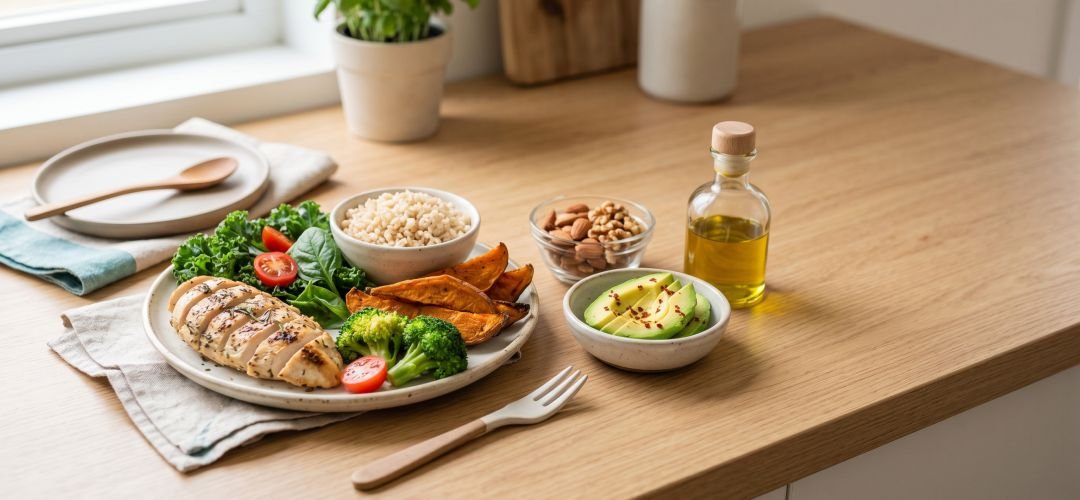
How to Calculate Macros for Weight Loss Without Overcomplicating It
To calculate macros for weight loss, start with your calorie target, set a protein goal, choose a reasonable fat target, and use the remaining calories for carbs. You do not need a perfect macro split to lose weight. You need a calorie deficit you can maintain, enough protein to stay full, and a plan that fits your lifestyle. Macros can be useful because they make weight loss feel less random. Instead of only asking “How many calories did I eat?”, you also start asking better questions: Did I eat enough protein? Are my meals filling? Do I have enough carbs for energy? Is my fat intake too low to enjoy my food? The goal is not to obsess over every gram. The goal is to build a simple system that helps you eat in a way you can repeat. <aside> Want a faster way to understand your meals? Take a photo of your food and see estimated calories, protein, carbs, and fat in seconds. </aside> What Are Macros? “Macros” is short for macronutrients. These are the nutrients your body needs in larger amounts and that provide energy. The three main macros are: Protein Carbohydrates Fat Each macro plays a different role. Protein helps support muscle repair, lean mass, and fullness. Carbohydrates provide energy, especially for training and active days. Fat supports hormone function, helps with absorption of fat-soluble vitamins, and makes meals more satisfying. Macros also provide calories. Carbohydrates provide 4 calories per gram, protein provides 4 calories per gram, and fat provides 9 calories per gram ( USDA Food and Nutrition Information Center ). That means macro tracking is really a more detailed way of tracking calories. Instead of only tracking total calories, you are looking at where those calories come from. Do Macros Matter More Than Calories for Weight Loss? No. Calories still matter most for weight loss. If you consistently eat more calories than your body uses, losing weight will be difficult. If you consistently eat fewer calories than your body uses, weight loss becomes more likely. Macros do not replace calories. They help you make your calorie target easier to follow. A 1,800-calorie day with enough protein, fiber-rich carbs, and satisfying fats will usually feel very different from a 1,800-calorie day made mostly of snacks, sugary drinks, and low-protein meals. That is the simplest way to think about it: Calories decide the direction. Macros influence the experience. If your calories are right but your protein is too low, you may feel hungrier. If your carbs are too low, your workouts may feel harder. If your fat is too low, your meals may feel bland and unsatisfying. The best macro plan is the one that helps you stay consistent. Step 1: Set Your Calorie Target Before calculating macros, you need a calorie target. Your calorie needs depend on: Age Sex Height Weight Activity level Training Goal Current eating habits You can estimate your calorie needs with an app, a calorie calculator, or a more detailed tool like the NIDDK Body Weight Planner, which is designed to help users create personalized calorie and physical activity plans to reach and maintain a goal weight ( NIDDK ). For weight loss, the target should usually be below your estimated…
Maya Bennett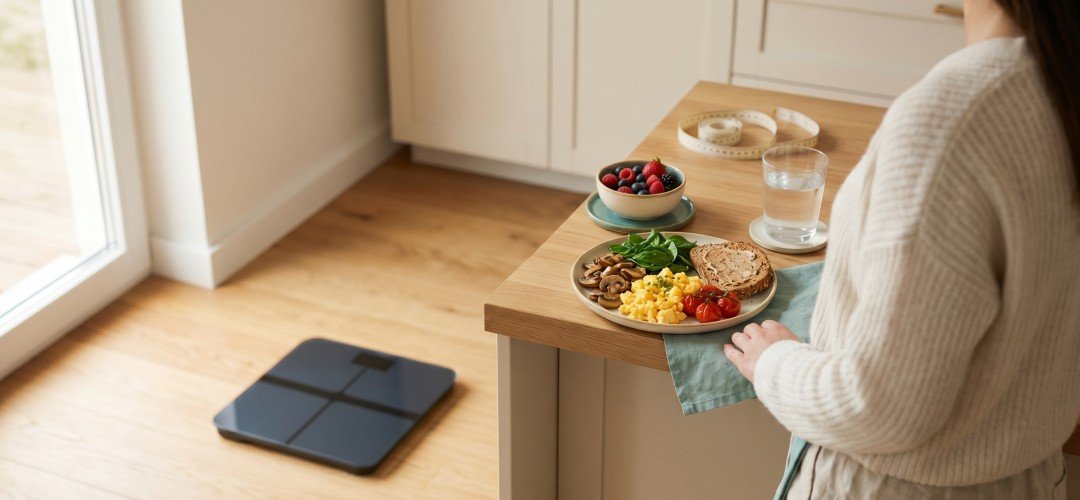
Why Am I Gaining Weight in a Calorie Deficit? 10 Reasons the Scale Is Up
If you are gaining weight in a calorie deficit, the first thing to know is this: the scale does not only measure body fat. It also measures water, glycogen, food in your digestive system, muscle, inflammation, and normal day-to-day fluctuations. So if the scale is up after a few days of eating less, it does not automatically mean you gained fat. In a true calorie deficit, your body does not have extra energy to store as new fat over time. But your scale weight can still go up temporarily because of water retention, higher sodium, more carbs, a hard workout, constipation, menstrual cycle changes, stress, poor sleep, or tracking mistakes. The key is learning how to tell the difference between temporary scale weight and a real problem with your deficit. <aside> Not sure whether your meals are really in a deficit? Take a photo of your meal and get a quick estimate of calories, protein, carbs, and fat before you log it. </aside> First: Are You Actually Gaining Fat? Probably not if the scale only went up for a few days. Fat gain requires a sustained calorie surplus. Short-term weight gain is usually caused by water, glycogen, food volume, or digestion. Cleveland Clinic notes that daily weight fluctuations of a few pounds are common and that short-term changes are often due to fluid retention, constipation, hormones, exercise, and lifestyle changes ( Cleveland Clinic ). That means a 2-pound jump overnight is not the same as 2 pounds of fat. To gain 2 pounds of fat, you would need a large energy surplus over time. But to gain 2 pounds of scale weight, you may only need a salty dinner, a high-carb meal, sore muscles, a late meal, constipation, or hormonal water retention. This is why one weigh-in is not enough information. Look at the trend over 2 to 4 weeks. If your average weight is slowly going down, your deficit is probably working even if some days are higher. 1. You’re Holding Water Water retention is one of the most common reasons the scale goes up during a calorie deficit. Your body can hold more water after: Salty meals Restaurant food Higher-carb meals Hard workouts Poor sleep Stress Travel Hormonal changes Certain medications Cleveland Clinic explains that after a meal high in carbohydrates or sodium, the body may temporarily retain more water, causing a slight increase in weight ( Cleveland Clinic ). This does not mean you gained fat. It means your body is temporarily holding more fluid. What to do: Do not panic after one high weigh-in. Drink water normally. Keep sodium more consistent. Avoid extreme “detox” or dehydration tactics. Compare weekly averages, not single days. 2. You Ate More Carbs Than Usual Carbs are stored in your body as glycogen. Glycogen is stored with water, so when you eat more carbs than usual, scale weight can rise even if calories are still controlled. This often happens when someone diets low-carb during the week, then eats more rice, pasta, bread, potatoes, fruit, or dessert over the weekend. The scale jumps, and they assume they gained fat. But much of that jump may be glycogen and water. This is also why people often lose weight very quickly in the first week of a low-carb diet. They are losing water, not just…
Maya Bennett