AI-Powered Nutrition

Scan your food.Know everything.

Point your camera at any meal. Get instant, accurate nutritional insights powered by advanced AI. No typing. No searching. Just clarity.

95% Accuracy
0
Calories
0g
Protein
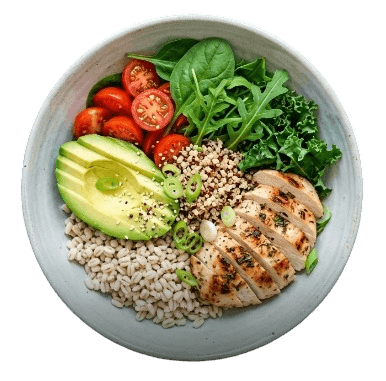
Healthy food bowl
Scan to Download
App Store
See It In Action

The future of nutrition tracking

Watch how AI Nutrition Scan makes tracking your meals as simple as taking a photo.

Video thumbnail showing healthy food preparation
✨ Powerful Features

Stop guessing. Start knowing.Your complete nutrition companion.

From instant food recognition to deep nutritional insights—everything you need to make smarter choices, reach your goals, and transform your relationship with food. All in one powerful app.

95% Accuracy

Instant Recognition

Point your camera at any meal whether it's a homemade dish, a restaurant plate, or a quick snack. Our advanced AI identifies foods instantly with industry-leading accuracy, breaking down each ingredient and portion size so you get precise macros and micros in seconds, without the hassle of manual entry. Recognizes 10,000+ foods and dishes. Works with home-cooked and restaurant meals. Identifies ingredients in complex recipes. Real-time processing in under 2 seconds.

  • Recognizes 10,000+ foods and dishes
  • Works with home-cooked and restaurant meals
  • Identifies ingredients in complex recipes
  • Real-time processing in under 2 seconds
10K+
Foods
<2s
Speed
Learn more →

Effortless Logging

AI removes the biggest hurdle to health tracking by making the process seamless and friction-free. Simply taking a picture allows the system to identify ingredients and automatically calculate calories and macronutrients. Includes a barcode scanner for packaged goods, ensuring accurate and verified nutritional data with minimal effort.

  • AI removes the biggest hurdle to health tracking by making the process seamless and friction-free.
  • Simply taking a picture allows the system to identify ingredients and automatically calculate calories and macronutrients.
  • Includes a barcode scanner for packaged goods, ensuring accurate and verified nutritional data with minimal effort.
Learn more →

Progress Monitoring

Habit Awareness: Visual diaries make identifying eating patterns effortless. Goal Tracking: Professional analytics monitor weight and macros beyond basic numbers. Data-Driven Motivation: Long-term progress visualization keeps you focused and informed.

  • Habit Awareness: Visual diaries make identifying eating patterns effortless.
  • Goal Tracking: Professional analytics monitor weight and macros beyond basic numbers.
  • Data-Driven Motivation: Long-term progress visualization keeps you focused and informed.
Learn more →

A Plan Built Around You

Personalized plans that fit your daily life rather than forcing you to change it. Tailored roadmaps based on your unique metabolism and physical needs.

  • Personalized plans that fit your daily life rather than forcing you to change it.
  • Tailored roadmaps based on your unique metabolism and physical needs.
Learn more →

Personal Goals

Set custom targets for calories, protein, or any nutrient. Get real-time progress updates and personalized recommendations. Real-time progress tracking. Smart recommendations.

  • Real-time progress tracking
  • Smart recommendations
Learn more →

Barcode Scanner

Quickly scan product barcodes for instant nutritional information from our extensive database.

Learn more →

Privacy First

All processing happens on-device. Your food photos never leave your phone.

Learn more →

Your 24/7 AI Nutritionist

Achieving your health goals requires more than just tracking; it requires informed decision-making. Our 24/7 AI Nutritionist is available whenever you need guidance. You can ask specific questions about food choices. Request healthy recipe suggestions that fit your goals. Seek practical advice on staying on track during social events.

  • You can ask specific questions about food choices.
  • Request healthy recipe suggestions that fit your goals.
  • Seek practical advice on staying on track during social events.
24/7
Available
Instant
Responses
Learn more →
How It Works

Three steps to smarter nutrition

No complicated setup. No manual entry. Just point, shoot, and track your nutrition effortlessly.

1

Snap & Scan

Point your camera at any meal. Our AI instantly recognizes what you're eating—no typing required.

  • Works in any lighting
  • Recognizes 10,000+ foods
  • Processes in under 2 seconds
Food scan
2

Get Instant Insights

See detailed nutritional breakdown including calories, macros, vitamins, and minerals—all calculated automatically.

  • 20+ nutrients tracked
  • 95% accuracy rate
  • Real-time calculations
Food
3

Track Your Progress

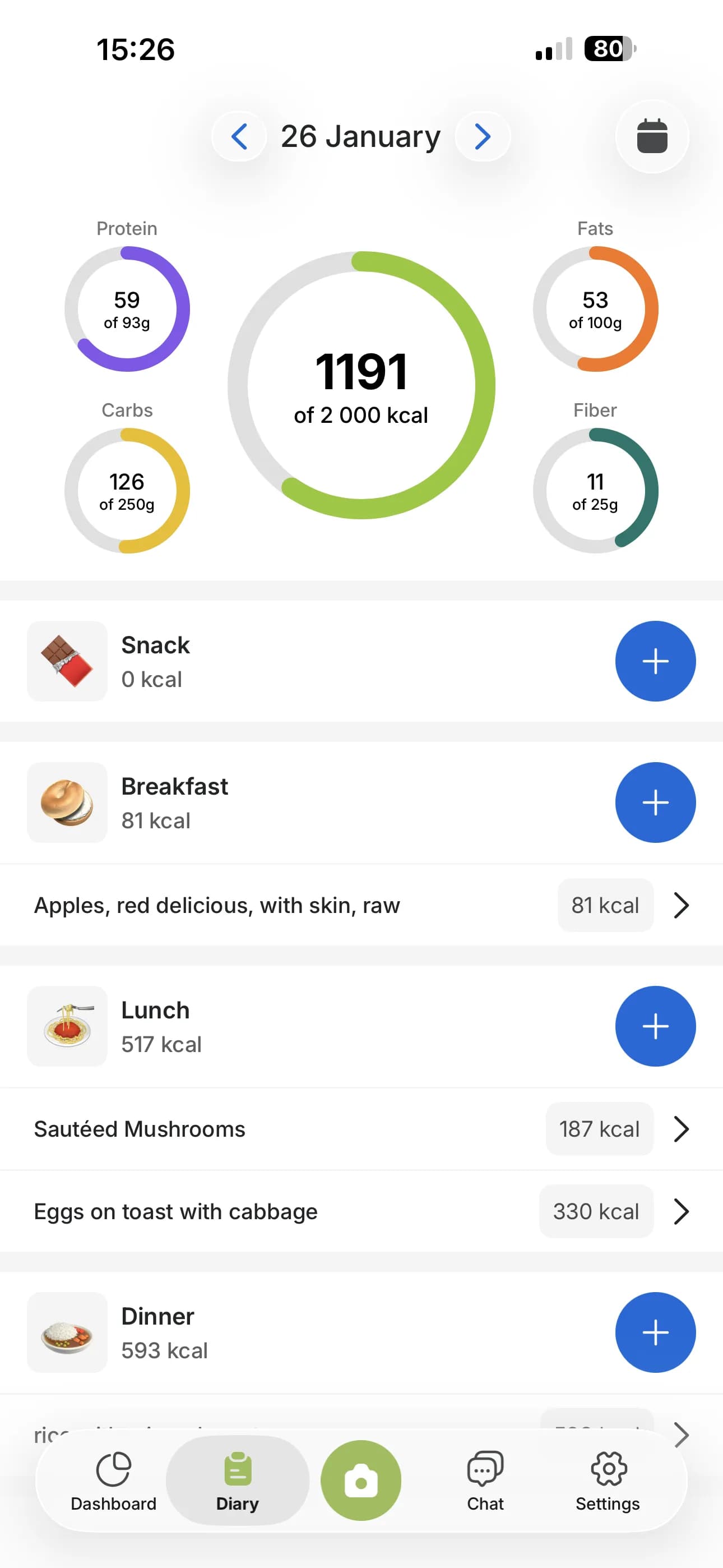
Monitor your daily nutrition goals, view trends over time, and build healthier eating habits effortlessly.

  • Daily goal tracking
  • Weekly insights
  • Personalized recommendations
Diary
FAQ

Frequently asked questions

Everything you need to know about the app. Can't find what you're looking for? Contact our support team.

Our AI achieves 95%+ accuracy on common foods and meals. The system is trained on over 10 million food images and continuously improves through machine learning.
Get Started

Start tracking smarter today

Transform your relationship with food through the power of artificial intelligence.

Download on the App StoreGet it on Google Play
📚 Knowledge Base

Latest from our blogNutrition insights & tips

Discover evidence-based articles on nutrition, mindful eating, and how to get the most out of AI Nutrition Scan.


Water Weight vs Fat Gain

Water Weight vs Fat Gain: How to Tell What the Scale Is Really Showing

If you are trying to lose weight and the scale suddenly jumps, it is easy to assume you gained fat. But in many cases, the difference between water weight vs fat gain comes down to timing. A quick increase overnight or over a few days is usually water, glycogen, food weight, or normal fluctuation. Real fat gain usually requires a sustained calorie surplus over time. That distinction matters because the scale does not only measure body fat. It also measures water, muscle, glycogen, food in your digestive system, waste, inflammation, and normal fluid shifts. So a higher weigh-in does not always mean your plan stopped working. If you are already eating in a calorie deficit and confused by the scale, read our full guide on why you may be gaining weight in a calorie deficit . This article goes deeper on one specific question: did you gain fat, or is the scale showing temporary water weight? <aside> Trying to understand whether your progress is real? AI Nutrition Scan helps you estimate calories and macros from meal photos, so you can track your food intake with less guesswork while watching your weight trend over time. Try AI Nutrition </aside> Quick Answer: Is It Water Weight or Fat Gain? If the scale jumps overnight or rises by a few pounds after a salty meal, high-carb meal, hard workout, poor sleep, travel, or your menstrual cycle, it is more likely water weight than fat gain. Fat gain usually happens more slowly because it requires your body to store excess energy over time. Water weight can change quickly because of sodium, carbohydrate storage, digestion, muscle repair, hormones, stress, and hydration. Henry Ford Health explains that it is almost impossible to gain or lose several pounds of real body weight in one day, and that large daily scale changes are more likely water weight than fat. Here is the simplest way to compare them: Sign More likely water weight More likely fat gain Timing Overnight or 1-3 days Gradual over weeks Trigger Sodium, carbs, workout, stress, travel, cycle Consistent calorie surplus Waist measurement Usually stable Often increases over time 7-day weight average Often returns down Keeps trending up How it feels Bloated, puffy, sore, heavy Usually less sudden What to do Stay consistent and watch the trend Review intake, activity, and targets One weigh-in is not a verdict. A trend is more useful. Water Weight vs Fat Gain: The Key Differences Water weight is temporary fluid-related weight. Fat gain is stored body fat. Both can make the scale go up, but they behave differently. Water can shift fast. Fat changes more slowly. Factor Water weight Fat gain Speed Fast, often overnight Slower, over time Main cause Fluid shifts, glycogen, sodium, hormones, digestion Sustained calorie surplus Common triggers Carbs, salt, hard workouts, stress, menstrual cycle Eating above maintenance consistently How long it lasts Days, sometimes 1-2 weeks Persists unless calorie balance changes Best way to track 7-day average, waist, symptoms 2-4 week trend, measurements Best response Avoid panic changes Adjust intake, activity, or targets This is why a sudden 2 lb increase should not automatically lead to cutting calories. If the increase…

Maya BennettMaya Bennett
What Exercise Burns the Most Calories

What Exercise Burns the Most Calories? 20 Activities Ranked by Time, Weight, and Effort

If you are wondering what exercise burns the most calories , the short answer is usually running, especially at faster speeds. Fast cycling, jump rope, rowing, swimming, stair climbing, boxing, and high-intensity interval training can also burn a high number of calories. But the “best” calorie-burning exercise is not always the one with the biggest number on a chart. Your actual calorie burn depends on your body weight, workout intensity, duration, fitness level, and how consistently you can repeat the activity. That last part matters. A brutal workout you only do once a month will not help as much as a moderate routine you can repeat every week. And for weight loss, exercise is only one side of the equation. You also need to understand what you eat, because calorie intake can easily offset calories burned. <aside> Trying to lose weight without guessing your food intake? AI Nutrition Scan helps you estimate calories and macros from a simple meal photo, so you can pair your workouts with a clearer view of what you eat. Try AI Nutrition </aside> Quick Answer: Which Exercise Burns the Most Calories? Running usually burns the most calories per hour among common exercises, especially at faster speeds. Other high-calorie exercises include fast cycling, jump rope, rowing, vigorous swimming, stair climbing, boxing, and HIIT. Here is the practical version: Goal Best choice Highest calorie burn per hour Running, fast cycling, jump rope Low-impact calorie burn Cycling, rowing, swimming, elliptical Short workouts Jump rope, HIIT, stair climber Beginner-friendly Brisk walking, cycling, swimming Best for long-term weight loss The exercise you can repeat consistently The exact number of calories burned depends on how hard you work, how long you exercise, and how much you weigh. Mayo Clinic notes that calorie burn varies based on the activity, intensity, body weight, and other individual factors. So instead of asking only “which exercise burns the most calories?”, it is better to ask: Which high-calorie exercise can I do safely, consistently, and often enough to support my goal? That is the question that actually matters for fat loss, fitness, and long-term results. Exercises That Burn the Most Calories, Ranked The table below gives approximate calories burned in 30 minutes for people weighing 125 lb, 155 lb, and 185 lb. These are estimates, not exact measurements. They are based on typical MET values and public calorie-burn references. Harvard Health publishes a widely used table showing calories burned in 30 minutes for many activities across different body weights. Rank Exercise Intensity 125 lb 155 lb 185 lb Best for 1 Running, 10 mph Very vigorous ~450 ~560 ~670 Maximum burn 2 Cycling, >20 mph Very vigorous ~450 ~560 ~670 High burn, lower impact 3 Running, 7.5 mph Vigorous ~350 ~440 ~520 Strong cardio burn 4 Jump rope, fast Vigorous ~340 ~420 ~500 Short workouts 5 Cycling, 16-19 mph Vigorous ~340 ~420 ~500 Low-impact intensity 6 Swimming laps, vigorous Vigorous ~280 ~350 ~420 Full-body cardio 7 Boxing or martial arts Vigorous ~280 ~350 ~420 Conditioning 8 Running, 6 mph Vigorous ~275 ~345 ~410 Accessible high burn 9 Rowing machine, vigorous Vigorous…

Maya BennettMaya Bennett
Active Calories vs Total Calories

Active Calories vs Total Calories: What’s the Difference?

If your Apple Watch, fitness tracker, or calorie app shows both active calories and total calories , the difference is simple: active calories are the calories you burn through movement, while total calories include active calories plus the calories your body burns at rest . In other words: Total calories = active calories + resting calories This matters because active calories tell you how much extra energy you used by moving, but total calories give you the bigger picture of your daily energy burn. For weight loss, total daily calories matter more because weight loss depends on your full energy balance, not just workout calories. <aside> Your watch can estimate calories burned, but your meals decide the other side of the equation. Scan your next meal with AI Nutrition Scan to estimate calories and macros from a food photo. </aside> Quick Answer: Active Calories vs Total Calories Active calories are the calories you burn through movement, exercise, and daily activity. Total calories include active calories plus the calories your body burns at rest to keep you alive. In simple terms: total calories = active calories + resting calories . For weight loss, total calories matter most because they represent your full daily calorie burn. Here is the easiest way to compare the three numbers: Metric What It Means Includes Resting Calories? Best Used For Active calories Calories burned through movement No Tracking activity and exercise Resting calories Calories burned at rest Yes Understanding baseline burn Total calories Active + resting calories Yes Estimating daily energy burn Think of active calories as the part you add through movement. Think of resting calories as the part your body uses to stay alive. Think of total calories as the full daily number. What Are Active Calories? Active calories are the calories your body burns through physical activity. This includes obvious exercise, like: Running Cycling Swimming Strength training HIIT Hiking Sports It also includes everyday movement, like: Walking Taking the stairs Cleaning Gardening Carrying groceries Playing with your kids Standing and moving around Apple says the red Move ring on Apple Watch shows how many active calories you have burned, while the Exercise ring tracks minutes of brisk activity ( Apple Support ). Active calories vary from person to person. The same 30-minute walk might burn different calories for two people because body weight, pace, heart rate, fitness level, terrain, and stride all matter. In general, you burn more active calories when: You move for longer. You move faster. You use more muscle groups. You weigh more. Your heart rate is higher. The activity is weight-bearing, like walking or running. You have less rest time during the workout. Active calories are useful because they show how much movement you added to your day. But they are not your total daily burn. What Are Resting Calories? Resting calories are the calories your body burns while you are at rest. Your body uses energy all day, even when you are not exercising. You burn calories to keep your heart beating, lungs breathing, brain working, body temperature stable, cells repairing, and organs functioning.…

Maya BennettMaya Bennett