How Much Protein Do You Need to Lose Weight?

Maya Bennett
Editor-in-Chief & AI-powered Nutrition Expert
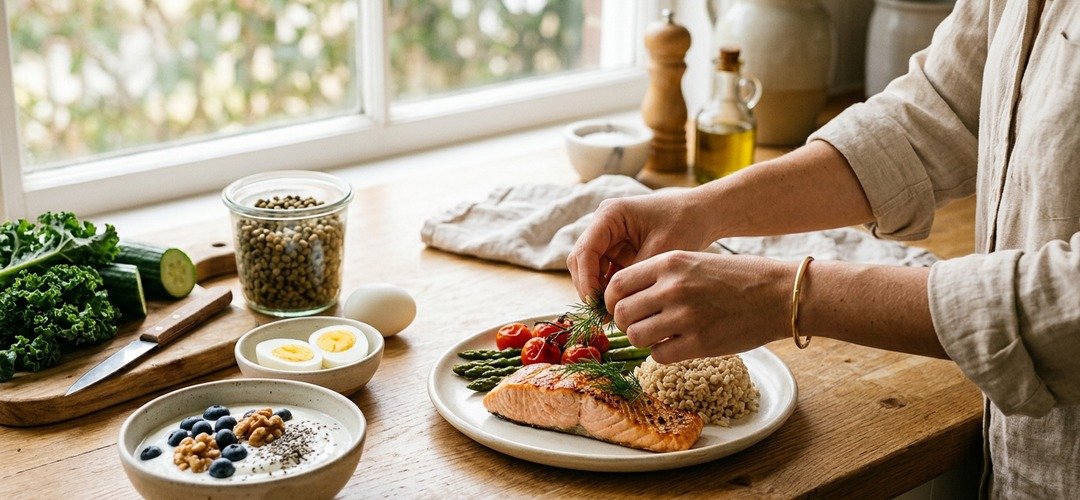
For weight loss, most adults should aim for 1.2 to 1.6 grams of protein per kilogram of body weight per day, or about 0.5 to 0.7 grams per pound. If you lift weights, are very active, or want to preserve as much muscle as possible while dieting, you may benefit from the higher end of that range.
Protein does not magically burn fat. You still need a calorie deficit to lose weight. But protein can make that deficit easier to stick to because it helps you feel fuller, supports muscle retention, and makes meals more satisfying.
The basic protein RDA for adults is often listed as 0.8 g per kg of body weight, but that number is designed to prevent deficiency, not to optimize weight loss, training, or body composition (Mayo Clinic Health System).
Want to know if your meals have enough protein? Scan your next meal with AI Nutrition Scan and see calories, protein, carbs, and fat in seconds.
Quick Protein Target for Weight Loss
Here is a simple starting point:
- Low activity or beginner: 1.0 to 1.2 g/kg per day
- General weight loss: 1.2 to 1.6 g/kg per day
- Weight loss plus strength training: 1.6 to 2.0 g/kg per day
- Lean, resistance-trained, aggressive deficit: higher ranges may apply with professional guidance
GoodRx gives a weight-loss range of 1.07 to 1.6 g/kg and notes that this is higher than the standard 0.8 g/kg adult recommendation (GoodRx).
Use this table to estimate your daily protein target:
| Body Weight | Lower Target, 1.2 g/kg | Higher Target, 1.6 g/kg |
|---|---|---|
| 120 lb / 54 kg | 65 g | 86 g |
| 140 lb / 64 kg | 76 g | 102 g |
| 160 lb / 73 kg | 87 g | 116 g |
| 180 lb / 82 kg | 98 g | 131 g |
| 200 lb / 91 kg | 109 g | 145 g |
| 220 lb / 100 kg | 120 g | 160 g |
| 250 lb / 113 kg | 136 g | 181 g |
For many people, this means a realistic daily target lands somewhere between 90 and 150 grams of protein per day. Smaller, less active people may need less. Larger, more active people may need more.
Why Protein Helps With Weight Loss
Protein helps with weight loss mostly because it makes dieting easier to sustain.
When calories are lower, hunger can go up. A higher-protein meal usually feels more filling than a meal made mostly from refined carbs or fat. That can make it easier to stay within your calorie target without feeling like you are constantly fighting hunger.
Protein also helps protect lean mass during weight loss. When you lose weight, the goal is usually to lose mostly fat, not muscle. A 2024 systematic review and meta-analysis found that increased protein intake helped adults with overweight or obesity retain muscle mass more effectively during weight loss (PubMed).
Protein also has a higher thermic effect than carbs or fat. That means your body uses more energy to digest and process protein. This does not mean protein cancels out calories, but it is one reason higher-protein diets can be helpful for weight management.
The key point:
Protein supports weight loss. It does not replace a calorie deficit.
If you eat more protein but also eat more total calories than you burn, you will not lose weight. The best approach is to combine enough protein with a realistic calorie target, regular movement, and meals you can repeat consistently.
How to Calculate Your Protein Goal
The simplest formula is:
Body weight in kg × 1.2 to 1.6 = daily protein target in grams
If you prefer pounds:
Body weight in lb × 0.5 to 0.7 = daily protein target in grams
Example for a 180 lb / 82 kg person:
- Lower target: 82 × 1.2 = 98 g/day
- Higher target: 82 × 1.6 = 131 g/day
So a practical protein target for that person would be around 100 to 130 grams per day.
If that feels like a big jump, do not try to change everything overnight. Start by adding protein to the meal where you currently get the least. For many people, that is breakfast.
Should You Use Current Weight or Goal Weight?
This is where many protein calculators become confusing.
If you are close to your goal weight, using your current weight is usually fine. But if you have a lot of weight to lose, using current body weight can create a protein target that feels unnecessarily high or hard to follow.
Use this rule of thumb:
- Use current weight if you are near your target weight.
- Use goal weight if you have a lot of weight to lose.
- Use the lower to middle range if you are sedentary.
- Use the higher range if you lift weights or are in a larger calorie deficit.
Example:
If someone weighs 250 lb but wants to reach 190 lb, using 250 lb may suggest a very high protein target. Using 190 lb as a reference may create a more realistic starting goal.
That could look like:
- 190 lb × 0.5 = 95 g/day
- 190 lb × 0.7 = 133 g/day
So a target of 100 to 130 grams per day may be a better starting point than forcing 175 grams right away.
Protein Targets by Goal
Different goals need different protein ranges.
| Goal | Suggested Protein Target |
|---|---|
| Basic health minimum | 0.8 g/kg |
| Weight loss, low activity | 1.0-1.2 g/kg |
| Weight loss, general target | 1.2-1.6 g/kg |
| Weight loss + strength training | 1.6-2.0 g/kg |
| Lean, trained, aggressive deficit | Higher ranges may apply with guidance |
Mayo Clinic Health System notes that people who exercise regularly may need around 1.1 to 1.5 g/kg, while people who lift weights or train for running or cycling may need around 1.2 to 1.7 g/kg (Mayo Clinic Health System).
The International Society of Sports Nutrition says 1.4 to 2.0 g/kg/day is enough for most exercising individuals to build or maintain muscle, with higher intakes sometimes used during calorie restriction in lean, resistance-trained people (PubMed).
For most people trying to lose weight, you do not need to chase the highest possible protein number. You need a target that is high enough to support fullness and muscle retention, but realistic enough to hit most days.
How Much Protein Per Meal?
Once you know your daily target, divide it across the day.
You do not need perfect timing. But eating most of your protein at dinner and almost none at breakfast can make the day harder. Spreading protein across meals usually helps with fullness and makes the target easier to reach.
GoodRx recommends spreading protein across the day and gives 25 to 30 grams per meal as a common practical target (GoodRx).
For most adults, a useful target is:
- 20 to 40 g protein per meal
- 25 to 35 g per meal as a simple default
- Add a protein-rich snack if your daily goal is above 120 g
Here is what that can look like:
| Daily Protein Goal | Breakfast | Lunch | Dinner | Snack |
|---|---|---|---|---|
| 90 g | 25 g | 30 g | 30 g | 5 g |
| 120 g | 30 g | 35 g | 35 g | 20 g |
| 150 g | 35 g | 40 g | 45 g | 30 g |
Do not worry if the numbers are not exact. A day with 112 grams when your target is 120 grams is still a useful day. Consistency matters more than perfection.
Not sure whether your lunch has 20 g or 40 g of protein? Take a food photo and let AI Nutrition Scan estimate it for you.
What Does 30 Grams of Protein Look Like?
Protein targets are easier to understand when you can picture them on a plate.
Here are common examples that provide roughly 25 to 35 grams of protein:
| Food | Approximate Protein |
|---|---|
| Chicken breast, cooked, 4 oz / 115 g | 30-35 g |
| Turkey breast, cooked, 4 oz / 115 g | 30 g |
| Tuna, 1 can | 25-30 g |
| Greek yogurt, 1 cup / 240 g | 20-25 g |
| Cottage cheese, 1 cup / 225 g | 25-30 g |
| 3 eggs + 2 egg whites | 25-30 g |
| Tofu, firm, 200 g | 24-30 g |
| Tempeh, 150 g | 28-32 g |
| Protein powder, 1 scoop | 20-30 g |
Plant-based meals can also be high in protein, but they often need more planning. Lentils, beans, tofu, tempeh, edamame, seitan, soy yogurt, and protein-enriched products can all help.
If you eat plant-based, aim for variety. Combining legumes, soy foods, whole grains, nuts, seeds, and protein powders when useful can make your target easier to reach.
Best High-Protein Foods for Weight Loss
The best protein foods for weight loss are not always the ones with the most protein. They are the ones that give you enough protein for a reasonable number of calories and help you feel satisfied.
Lean animal proteins
Good options include:
- Chicken breast
- Turkey
- Lean beef
- White fish
- Salmon
- Tuna
- Eggs and egg whites
- Low-fat Greek yogurt
- Cottage cheese
Salmon, whole eggs, and lean beef can be excellent foods, but they also bring more fat and calories than very lean options. That is not bad. It just means portions matter.
Plant-based proteins
Good options include:
- Tofu
- Tempeh
- Seitan
- Edamame
- Lentils
- Beans
- Chickpeas
- Soy milk
- Pea protein
- Vegan protein powder
Beans and lentils are especially useful because they bring protein and fiber together. They may not be as protein-dense as chicken or fish, but they can be very filling.
Convenient protein options
Helpful options include:
- Protein shakes
- Protein bars
- Greek yogurt cups
- Cottage cheese pots
- Tuna packets
- Ready-to-eat boiled eggs
- Rotisserie chicken
- High-protein wraps
Convenience matters. A protein target that only works when you cook perfect meals is not very useful.
Can You Eat Too Much Protein?
Yes, but the answer depends on the person.
For healthy adults, a higher-protein diet is usually safe when it still includes enough fiber, fruits, vegetables, fluids, and overall calories. But more protein is not always better.
Mayo Clinic Health System notes that excessive protein intake is often considered more than 2 g/kg/day, and people with kidney disease may need individualized guidance (Mayo Clinic Health System).
Too much protein can become a problem if it:
- Pushes out fiber-rich foods
- Makes your diet too low in fruits or vegetables
- Adds more calories than you realize
- Causes digestive discomfort
- Becomes too expensive or stressful
- Encourages an overly restrictive diet
If you have kidney disease, liver disease, a history of eating disorders, are pregnant, or have a medical condition, speak with a qualified healthcare professional before making major diet changes.
Common Protein Mistakes During Weight Loss
Protein is simple in theory, but easy to get wrong in daily life.
Here are the most common mistakes:
- Eating very little protein at breakfast.
- Saving almost all protein for dinner.
- Tracking calories but ignoring protein.
- Drinking high-calorie protein shakes without counting them.
- Choosing “high-protein” snacks that are also high in calories.
- Setting a protein goal so high it becomes impossible to follow.
- Forgetting fiber.
- Assuming protein alone causes fat loss.
- Eating protein but not staying in a calorie deficit.
- Not adjusting the target when training, hunger, or weight-loss pace changes.
The biggest mistake is making the target too complicated. If your current intake is 60 grams per day, jumping straight to 160 grams may feel overwhelming. A better first step might be 90 grams.
Then, once that feels easy, you can increase again if needed.
How to Track Protein Without Overthinking It
You do not need to weigh every gram of chicken forever.
But you do need enough consistency to know whether you are close to your target. Many people think they are eating high protein because one meal has chicken or eggs. Then they track for a few days and realize they are still only getting 60 to 80 grams.
Start with a simple system:
- Pick your daily protein target.
- Choose 2 to 3 go-to breakfasts with at least 25 g protein.
- Build lunch and dinner around a clear protein source.
- Add one high-protein snack if needed.
- Track for a week and adjust.
If tracking every ingredient feels annoying, use photos as a shortcut. A food photo can help you estimate protein, calories, carbs, and fat without turning every meal into a spreadsheet.
The goal is not perfect tracking. The goal is awareness.
Sample High-Protein Day for Weight Loss
Here is an example day with around 125 grams of protein:
| Meal | Example | Protein |
|---|---|---|
| Breakfast | Greek yogurt, berries, oats, chia seeds | 30 g |
| Lunch | Chicken salad wrap with vegetables | 35 g |
| Snack | Protein shake or cottage cheese | 25 g |
| Dinner | Salmon, potatoes, vegetables | 35 g |
| Total | 125 g |
This is only one example. Your day might include tofu, eggs, lentils, tuna, turkey, beans, or a protein smoothie.
The best high-protein diet is the one you can repeat without feeling trapped.
Do You Need Protein Shakes?
No, you do not need protein shakes to lose weight.
Protein shakes are just a convenient tool. They can help if you struggle to reach your target with regular food, have a busy schedule, or need a quick post-workout option.
But shakes can also work against you if they add calories without making you feel full.
A good protein shake for weight loss is usually:
- 20 to 30 g protein
- Not too high in added sugar
- Easy to fit into your calorie target
- Used to fill a gap, not replace every meal
Whole foods should still do most of the work because they bring fiber, micronutrients, texture, and satiety.
Should You Track Protein or Calories First?
For weight loss, calories determine the overall direction. Protein helps improve the quality and sustainability of that weight loss.
So the best answer is:
Track both, but do not obsess over either.
If you are just starting, focus on:
- Calories within a reasonable deficit
- Protein close to your target
- Enough fiber
- Mostly whole foods
- Meals you can repeat
If you only track calories, you might lose weight but feel hungry and lose more muscle than necessary. If you only track protein, you might eat too many calories and not lose weight.
The combination works better.
Final Takeaway
For weight loss, most adults should aim for 1.2 to 1.6 g of protein per kg of body weight per day, or about 0.5 to 0.7 g per pound.
A simple summary:
- Basic minimum: 0.8 g/kg
- General weight loss: 1.2 to 1.6 g/kg
- Active or strength training: 1.6 to 2.0 g/kg
- Most meals: 25 to 35 g protein
Protein helps most when it is paired with a calorie deficit, strength training, enough fiber, and consistent meals.
You do not need the perfect protein target. You need a realistic one that you can hit most days.
Protein targets only work if you can track them consistently. Try AI Nutrition Scan to make calorie and macro tracking easier.
FAQ
How much protein do I need to lose weight?
Most adults should aim for 1.2 to 1.6 g of protein per kg of body weight per day for weight loss. That is about 0.5 to 0.7 g per pound.
Is 100 grams of protein enough to lose weight?
For many people, yes. 100 grams of protein per day can be a solid target for weight loss, especially for smaller or moderately active adults. Larger or more active people may need more.
Is 150 grams of protein too much?
150 grams is not automatically too much. It depends on your body weight, calorie target, activity level, and health status. For a 220 lb / 100 kg active person, 150 grams may be reasonable. For a much smaller sedentary person, it may be more than necessary.
How much protein do I need per day to lose belly fat?
There is no special protein target for belly fat. A good general target is 1.2 to 1.6 g/kg per day. Belly fat decreases through overall fat loss, which requires a calorie deficit over time.
Should I use current weight or goal weight for protein?
Use current weight if you are close to your goal weight. Use goal weight if you have a lot of weight to lose and your protein target feels unrealistically high.
Can protein help me lose weight without exercise?
Yes, protein can help with fullness and muscle retention even without exercise. But combining enough protein with strength training usually gives better body composition results.
Can I lose weight without eating a high-protein diet?
Yes. Weight loss depends on a calorie deficit. But a higher-protein diet often makes that deficit easier because it can reduce hunger and support muscle retention.
How much protein should I eat at breakfast?
Most people do well with 25 to 35 grams of protein at breakfast. This can make the rest of the day easier and reduce the need to “catch up” at dinner.
What happens if I do not eat enough protein while dieting?
You may feel hungrier, struggle to recover from workouts, and lose more lean mass during weight loss. Total calories still matter, but protein improves the quality of the diet.
Do protein shakes help with weight loss?
Protein shakes can help if they make it easier to hit your protein target within your calorie goal. They are not required, and high-calorie shakes can slow weight loss if they push you over your calorie target.
Is too much protein bad for weight loss?
Too much protein can add unnecessary calories or crowd out fiber-rich foods. People with kidney disease or medical conditions should get personalized guidance before following a high-protein diet.
Should I track protein or calories first?
For weight loss, calories come first because they control the deficit. Protein should be tracked alongside calories because it helps with fullness, muscle retention, and consistency.
Share this article
Continue reading

Active Calories vs Total Calories: What’s the Difference?
If your Apple Watch, fitness tracker, or calorie app shows both active calories and total calories , the difference is simple: active calories are the calories you burn through movement, while total calories include active calories plus the calories your body burns at rest . In other words: Total calories = active calories + resting calories This matters because active calories tell you how much extra energy you used by moving, but total calories give you the bigger picture of your daily energy burn. For weight loss, total daily calories matter more because weight loss depends on your full energy balance, not just workout calories. <aside> Your watch can estimate calories burned, but your meals decide the other side of the equation. Scan your next meal with AI Nutrition Scan to estimate calories and macros from a food photo. </aside> Quick Answer: Active Calories vs Total Calories Active calories are the calories you burn through movement, exercise, and daily activity. Total calories include active calories plus the calories your body burns at rest to keep you alive. In simple terms: total calories = active calories + resting calories . For weight loss, total calories matter most because they represent your full daily calorie burn. Here is the easiest way to compare the three numbers: Metric What It Means Includes Resting Calories? Best Used For Active calories Calories burned through movement No Tracking activity and exercise Resting calories Calories burned at rest Yes Understanding baseline burn Total calories Active + resting calories Yes Estimating daily energy burn Think of active calories as the part you add through movement. Think of resting calories as the part your body uses to stay alive. Think of total calories as the full daily number. What Are Active Calories? Active calories are the calories your body burns through physical activity. This includes obvious exercise, like: Running Cycling Swimming Strength training HIIT Hiking Sports It also includes everyday movement, like: Walking Taking the stairs Cleaning Gardening Carrying groceries Playing with your kids Standing and moving around Apple says the red Move ring on Apple Watch shows how many active calories you have burned, while the Exercise ring tracks minutes of brisk activity ( Apple Support ). Active calories vary from person to person. The same 30-minute walk might burn different calories for two people because body weight, pace, heart rate, fitness level, terrain, and stride all matter. In general, you burn more active calories when: You move for longer. You move faster. You use more muscle groups. You weigh more. Your heart rate is higher. The activity is weight-bearing, like walking or running. You have less rest time during the workout. Active calories are useful because they show how much movement you added to your day. But they are not your total daily burn. What Are Resting Calories? Resting calories are the calories your body burns while you are at rest. Your body uses energy all day, even when you are not exercising. You burn calories to keep your heart beating, lungs breathing, brain working, body temperature stable, cells repairing, and organs functioning.…
Maya Bennett
How Many Calories Do Jumping Jacks Burn?
Jumping jacks burn roughly 7 to 16 calories per minute for most adults, depending on body weight, pace, and intensity. A 160 lb person burns about 97 calories in 10 minutes at a moderate pace and about 121 calories in 10 minutes at a vigorous pace, using the standard MET calorie formula. The exact number depends on how hard you are working. Slow step jacks, regular jumping jacks, fast jumping jacks, and explosive squat jacks do not burn the same number of calories. The short answer: 100 jumping jacks: about 15 to 38 calories 500 jumping jacks: about 75 to 189 calories 10 minutes: about 73 to 189 calories 30 minutes: about 218 to 567 calories Those ranges are wide because body weight and intensity matter. A lighter person moving slowly will burn much less than a heavier person doing fast, powerful jumping jacks with minimal rest. <aside> Exercise helps with calorie burn, but meals still drive your daily balance. Scan your next meal to see calories, protein, carbs, and fat in seconds. </aside> Quick Answer: Calories Burned Per Minute Here is a practical estimate of how many calories jumping jacks burn per minute by body weight. These estimates use: Moderate jumping jacks: 8 MET Vigorous jumping jacks: 10 MET MET values are commonly used to estimate exercise energy expenditure. NASM gives the standard calorie formula as METs × 3.5 × body weight in kg ÷ 200 = kcal per minute ( NASM ). Body Weight Moderate, 8 MET Vigorous, 10 MET 120 lb 7.3 cal/min 9.1 cal/min 140 lb 8.5 cal/min 10.6 cal/min 160 lb 9.7 cal/min 12.1 cal/min 180 lb 10.9 cal/min 13.6 cal/min 200 lb 12.1 cal/min 15.1 cal/min 220 lb 13.3 cal/min 16.6 cal/min 250 lb 15.1 cal/min 18.9 cal/min For most people, a realistic range is 7 to 16 calories per minute . Smaller or lighter people may be near the lower end. Heavier people or people doing fast, vigorous sets may be near the higher end. Calories Burned by Duration If you prefer to think in workout time instead of calories per minute, use this table. The ranges below estimate moderate to vigorous jumping jacks. Body Weight 5 min 10 min 20 min 30 min 120 lb 36-45 73-91 145-181 218-272 140 lb 42-53 85-106 169-212 254-317 160 lb 48-61 97-121 194-242 290-363 180 lb 54-68 109-136 218-272 327-408 200 lb 60-76 121-151 242-302 363-454 220 lb 67-83 133-166 266-333 399-499 250 lb 76-94 151-189 302-378 454-567 This is why the same workout can produce very different calorie estimates. Ten minutes of jumping jacks might be a quick 75-calorie warm-up for one person and a 150-calorie cardio burst for someone else. How Many Calories Do 100 Jumping Jacks Burn? 100 jumping jacks burn about 15 to 38 calories , depending on your weight and intensity. This estimate assumes that 100 jumping jacks takes about 2 minutes at roughly 50 jumping jacks per minute. If you do them faster, the session takes less time. If you do them slower or take breaks, the session takes longer. Body Weight 100 Jacks, Moderate 100 Jacks, Vigorous 120 lb 15 18 140 lb 17 21 160 lb 19 24 180 lb 22 27 200 lb 24 30 220 lb 27 33 250 lb 30 38 If you weigh around 160 lb, 100 jumping jacks will usually burn about 20 to 25 calories . If you weigh around 200 lb, the same 100 reps may burn…
Maya Bennett
How to Build a Healthy Eating Routine You Can Actually Stick To
Building a healthy eating routine is not about following the perfect diet. It is about creating a simple structure you can repeat on normal days, busy days, weekends, and days when motivation is low. The best routine is not the strictest one. It is the one that makes healthy choices easier without making your life feel smaller. That means you do not need to meal prep every meal, cut out every food you enjoy, or track every gram forever. You need a few reliable meals, a flexible plate structure, an easier way to notice patterns, and a plan for the moments that usually throw you off. <aside> Want to understand your current routine first? Take a photo of your next meal and get a quick estimate of calories, protein, carbs, and fat in seconds. </aside> What Is a Healthy Eating Routine? A healthy eating routine is a repeatable way of eating that supports your goals, energy, appetite, health, and lifestyle. It is not a fixed meal plan. It is not a list of forbidden foods. It is not eating the same “clean” foods every day until you burn out. A good routine gives you answers to simple daily questions: What do I usually eat for breakfast? What are my easy lunches? What do I keep at home for quick meals? How do I build a balanced plate? What do I do when I eat out? How do I handle snacks? What do I do after a day that does not go to plan? The Dietary Guidelines for Americans emphasize healthy eating patterns over isolated foods and explain that all food and beverage choices matter over time, within an appropriate calorie level, to support nutrient adequacy and reduce chronic disease risk ( Dietary Guidelines for Americans ). That is the key idea: your routine matters more than any single meal. Why Most Healthy Eating Plans Don’t Stick Most healthy eating plans fail because they are built for an ideal week, not a real one. They assume: You will have time to cook every day. You will always be motivated. You will never eat out. You will always want the same foods. You will not get tired, stressed, busy, or hungry. You will be able to use willpower at every meal. That is not how life works. The CDC recommends a thoughtful approach to improving eating habits: reflect , replace , and reinforce , rather than making sudden radical changes that are unlikely to last ( CDC ). In other words, do not start by trying to overhaul everything. Start by understanding what you already do, replace one or two patterns, then reinforce what works. Step 1: Start With Your Current Routine Before you build a better routine, look at the one you already have. For 3 to 7 days, track your normal meals without trying to be perfect. You are not judging yourself. You are collecting data. Notice: When you eat. Which meals keep you full. Which meals lead to snacking. When cravings show up. How often you eat out. Which drinks add calories. Where protein is missing. Which meals are easiest to repeat. The CDC suggests including everything you consume for a few days in a food and beverage diary because it can help you see what you eat and drink and consider small changes ( CDC ). This is where photo tracking can help. Instead of manually writing everything down, take a photo of each meal…
Maya Bennett