How Accurate Are AI Calorie Counters? What Food Photos Can and Can’t Tell You

Maya Bennett
Editor
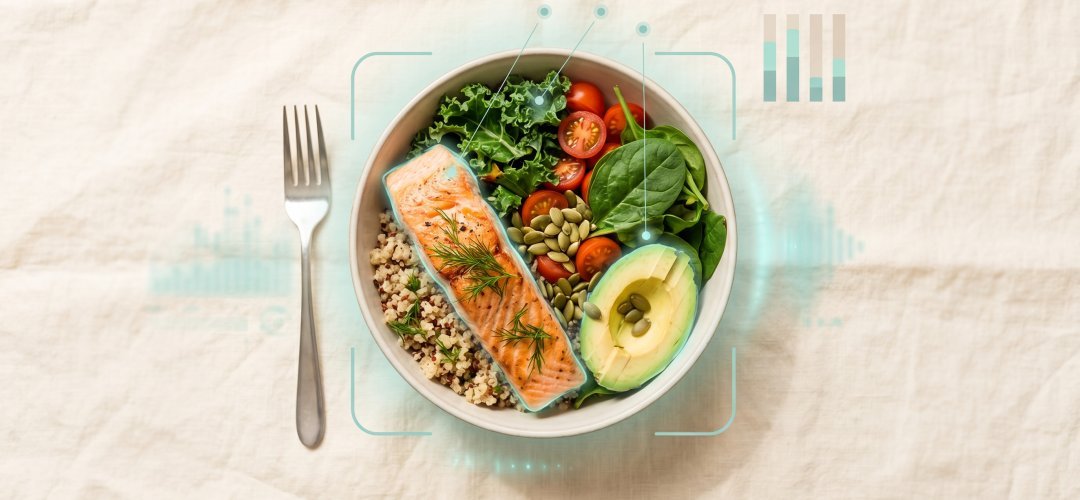
AI calorie counters can be accurate enough to help many people track their meals more consistently, but they are not perfectly accurate from a photo alone. A food photo can help identify visible foods, estimate rough portions, and create a fast calorie and macro estimate, but it cannot reliably know hidden oils, exact grams, cooking methods, or every ingredient in a mixed dish.
That means the best way to use an AI calorie counter is not to treat it like a lab test. It is to use it as a fast starting point, then review and adjust the estimate when you know more about the meal.
If manual food logging feels too slow, AI can remove a lot of friction. But if you need medical-level precision, a photo estimate by itself is not enough.
How AI Calorie Counters Work
Most AI calorie counters follow a similar process:
- You take a photo of your meal.
- The AI identifies visible foods in the image.
- The app estimates portion sizes.
- The foods are matched with nutrition data.
- You receive estimated calories, protein, carbs, and fat.
- You can edit the foods, quantities, or ingredients before saving.
This process is useful because it makes food tracking faster than searching a database for every ingredient. It also helps people log meals they might otherwise skip, such as restaurant meals, homemade dishes, or snacks eaten on the go.
But the estimate is only as good as the inputs. Photo quality, visible ingredients, portion size, database quality, and user corrections all affect the final number.
So, How Accurate Are AI Calorie Counters?
AI calorie counters are best understood as estimation tools, not exact measuring tools. A 2023 systematic review of AI-based dietary assessment from food images found that calorie estimation errors varied widely across studies, with relative errors ranging from 0.10% to 38.3%, and concluded that current tools still need more development before being used as standalone methods in nutrition research or clinical practice (systematic review in PMC).
That does not mean AI calorie counters are useless. It means accuracy depends heavily on the type of meal, how clear the photo is, whether the app can estimate portions well, and whether the user confirms or edits the result.
In practice, AI estimates are usually most helpful when the goal is consistency and awareness. They are less reliable when the goal is exact macro tracking, clinical nutrition, or precise calorie control.
When AI Calorie Counters Are More Accurate
AI calorie counters tend to work better when foods are easy to see and separate. A plate with grilled chicken, rice, and broccoli is easier to estimate than a curry, stew, casserole, or heavily sauced pasta.
They are usually more accurate for:
- Single-item foods, such as bananas, apples, boiled eggs, toast, protein bars, or packaged snacks.
- Meals with clearly separated components, such as chicken, rice, vegetables, and sauce on the side.
- Packaged foods where the label, barcode, or serving size can be checked.
- Meals where the user adds extra context, such as “two eggs,” “one tablespoon of olive oil,” or “about 150g cooked rice.”
- Repeat meals that the user has already reviewed and saved.
Single-unit foods are easier because the portion is more obvious. In one portion-size estimation study, image-based estimates performed much better for single-unit foods than for liquids and amorphous foods, with 80% of single-unit estimates falling within 25% of true intake (Journal of Human Nutrition and Dietetics).
Try it yourself: Take a photo of your next meal and get an instant estimate of calories, protein, carbs, and fat. Review the result, adjust anything the photo can’t know, and log your meal in seconds.
When AI Calorie Counters Are Less Accurate
AI calorie counters struggle when important calorie information is not visible in the photo. A picture can show what is on the plate, but it cannot always show what went into the pan.
They are usually less accurate for:
- Soups, smoothies, stews, curries, and sauces.
- Foods cooked with hidden oil, butter, cream, or sugar.
- Mixed dishes where ingredients are blended, covered, or layered.
- Restaurant meals with unknown recipes.
- Large portions with no size reference.
- Meals photographed in poor lighting or from a bad angle.
- Foods where small differences change calories a lot, such as nuts, oils, cheese, nut butter, dressings, and desserts.
This is why two meals that look similar can have very different calories. A salad with grilled chicken and light dressing might be relatively low in calories, while a similar-looking salad with creamy dressing, cheese, avocado, croutons, and extra oil can be much higher.
The Biggest Accuracy Problem: Portion Size
The hardest part of calorie tracking is often not identifying the food. It is estimating how much of that food is on the plate.
For example, an AI system may correctly identify rice, chicken, and olive oil. But the difference between 100g and 200g of cooked rice, or between one tablespoon and three tablespoons of oil, can change the total calories significantly.
Research on image-based portion estimation shows why this is difficult. In one study, image-based portion estimates were within 10% of true intake only 13% of the time and within 25% only 35% of the time.
The same study found that image-based estimates were especially weak for liquids, where only 5% of estimates were within 10% of true intake and 11% were within 25% of true intake (Journal of Human Nutrition and Dietetics).
This matters because calorie estimates depend on both food type and quantity. Getting the food right but the portion wrong can still produce a misleading calorie total.
What Food Photos Can Tell You
A clear food photo can provide a useful amount of information. It can show which foods are present, how the plate is arranged, whether the meal is mostly protein, carbs, or fat, and whether there are obvious toppings, sides, or sauces.
Food photos are especially useful for:
- Identifying visible ingredients.
- Estimating broad meal composition.
- Creating a quick first-pass calorie estimate.
- Remembering what you ate later.
- Reducing the effort of manual logging.
- Building consistency over time.
For many people, this is enough to make tracking easier. A fast estimate that you actually log may be more useful than a perfect manual entry that you never complete.
What Food Photos Can’t Tell You
Food photos have real limits. A photo usually cannot tell:
- How much oil was used in cooking.
- Whether meat was cooked in butter or sprayed lightly with oil.
- Whether a sauce is low-fat, full-fat, homemade, or store-bought.
- The exact grams of rice, pasta, potatoes, meat, or cheese.
- The amount of sugar in a drink, marinade, or dessert.
- Whether a smoothie contains water, milk, yogurt, nut butter, or protein powder.
- The exact recipe used for a homemade dish.
- The nutrition values of a specific restaurant meal.
This is why user input still matters. If you know the meal had extra oil, sauce, cheese, dressing, or a larger portion than it appears, you should add that information before saving the log.
AI vs Manual Calorie Tracking
No tracking method is perfect. Even nutrition labels require users to pay attention to serving size, because the calories and nutrients on the label refer to the listed serving size rather than whatever amount the person actually eats (FDA).
The best approach depends on the situation:
| Method | Best for | Main weakness |
|---|---|---|
| AI photo logging | Fast estimates and consistency | Portion sizes and hidden ingredients |
| Barcode scanning | Packaged foods | Not useful for homemade or restaurant meals |
| Manual database search | Common foods and recipes | Slow and easy to abandon |
| Food scale | Highest practical precision | More effort and friction |
| Voice or text logging | Adding context quickly | Depends on how much detail the user provides |
The most accurate nutrition workflow usually combines methods. Use AI photos for speed, barcode scanning for packaged foods, manual edits for hidden ingredients, and a food scale when precision matters.
How to Make AI Calorie Estimates More Accurate
You can improve AI calorie counter accuracy by giving the app better information.
1. Take a clear photo
Use good lighting and capture the whole plate. A top-down or 45-degree angle usually works better than a close-up that cuts off part of the meal.
2. Keep foods visible
When possible, keep foods separated instead of mixing everything together. Chicken, rice, vegetables, and sauce on the side are easier to estimate than the same ingredients hidden inside a mixed bowl.
3. Add hidden ingredients
If the meal includes oil, butter, dressing, cheese, cream, sugar, or sauce, add a note. These ingredients can add a lot of calories without being obvious in a photo.
4. Confirm portions when you know them
If you know the amount, enter it. “150g chicken,” “two eggs,” “one cup cooked rice,” or “one tablespoon olive oil” is much more useful than a photo alone.
5. Use barcode scanning for packaged foods
For packaged foods, the barcode or nutrition label is often better than a photo of the food. Just remember to check the serving size, because eating two servings means doubling the calories and nutrients listed for one serving (FDA).
6. Use a food scale for calorie-dense foods
You do not need to weigh everything forever. But weighing calorie-dense foods like oil, peanut butter, nuts, cereal, cheese, rice, pasta, and snacks can teach you what real portions look like.
7. Save repeat meals
If you eat the same breakfast, lunch, or snack often, review it once and save it. Repeat meals are one of the easiest ways to improve tracking consistency.
8. Track trends, not perfection
One imperfect estimate will not ruin your progress. What matters more is whether your average intake and body weight trend are moving in the right direction over several weeks.
Are AI Calorie Counters Good Enough for Weight Loss?
For many people, AI calorie counters are good enough to support weight loss because they make logging easier and more consistent. The goal is not to create a perfect scientific record of every calorie; the goal is to create enough awareness to make better decisions.
AI tracking can help you notice patterns such as:
- Meals that are higher in calories than expected.
- Low-protein days.
- Snacks that are easy to forget.
- Restaurant meals that push you above your target.
- Weekends that look very different from weekdays.
That said, AI calorie counters should not be treated as medical devices. If you have diabetes, kidney disease, a history of disordered eating, are pregnant, or are following a medically prescribed diet, work with a qualified healthcare professional before relying on any nutrition tracking app.
The Honest Verdict
AI calorie counters are not magic. They cannot see hidden ingredients, they cannot know exact grams from every photo, and they cannot turn a complex homemade recipe into a perfect nutrition label without extra information.
But they can be very useful. They make food logging faster, reduce the effort of tracking, and help users stay consistent when manual tracking feels too tedious.
The best way to think about AI calorie tracking is this:
A food photo gives you a starting estimate. Your edits make it better. Your consistency makes it useful.
If you want the most accurate result, combine AI photo logging with common sense, portion confirmation, barcode scanning, and occasional weighing. If you want the most sustainable result, use AI to reduce friction and focus on the patterns that matter over time.
FAQ
Can AI really count calories from a photo?
AI can estimate calories from a photo by identifying visible foods, estimating portions, and matching those foods to nutrition data. However, a photo-based estimate is not the same as a precise measurement, because the app may not know hidden ingredients, exact serving sizes, or cooking methods.
Are AI calorie counters more accurate than guessing?
They can be more useful than guessing, especially when the meal is clear and the user confirms portions. However, accuracy varies widely, and research shows that AI-based calorie estimates still need more development before being used as standalone nutrition assessment tools in research or clinical practice (systematic review in PMC).
What foods are hardest for AI calorie counters to estimate?
Soups, smoothies, curries, stews, sauces, casseroles, and restaurant meals are harder to estimate because ingredients and quantities are often hidden. Liquids and mixed foods are especially difficult for image-based portion estimation (Journal of Human Nutrition and Dietetics).
Can AI detect oil, butter, or sauces?
AI may detect visible oil, butter, or sauce, but it usually cannot know how much was used in cooking. If a meal was cooked with oil, butter, cream, or dressing, you should add that information manually.
Should I still use a food scale?
Use a food scale when precision matters, especially for calorie-dense foods like oils, nut butters, nuts, cereal, cheese, rice, pasta, and snacks. You do not need to weigh every meal, but weighing some foods can help you learn what real portions look like.
Are AI calorie counters good for weight loss?
AI calorie counters can help with weight loss when they make food tracking easier and more consistent. They work best as awareness tools, not as perfect calorie calculators.
What is the most accurate way to track calories?
The most accurate practical method is usually a combination of weighing key foods, using verified nutrition data, scanning packaged foods, and reviewing portion sizes. AI photo logging can make the process faster, but manual review still improves accuracy.
How can I improve photo calorie tracking accuracy?
Take clear photos, show the whole plate, keep foods visible, add hidden ingredients, confirm portions when you know them, scan packaged foods, and review the estimate before saving.
Try It
Want a faster way to track meals? Take a photo of your next meal, review the estimated calories and macros, and adjust anything the photo cannot know, such as oil, sauces, or portion size.
Fast estimates are useful. Editable estimates are better.
Share this article
Continue reading
Why Am I Gaining Weight in a Calorie Deficit? 10 Reasons the Scale Is Up
If you are gaining weight in a calorie deficit, the first thing to know is this: the scale does not only measure body fat. It also measures water, glycogen, food in your digestive system, muscle, inflammation, and normal day-to-day fluctuations. So if the scale is up after a few days of eating less, it does not automatically mean you gained fat. In a true calorie deficit, your body does not have extra energy to store as new fat over time. But your scale weight can still go up temporarily because of water retention, higher sodium, more carbs, a hard workout, constipation, menstrual cycle changes, stress, poor sleep, or tracking mistakes. The key is learning how to tell the difference between temporary scale weight and a real problem with your deficit. <aside> Not sure whether your meals are really in a deficit? Take a photo of your meal and get a quick estimate of calories, protein, carbs, and fat before you log it. </aside> First: Are You Actually Gaining Fat? Probably not if the scale only went up for a few days. Fat gain requires a sustained calorie surplus. Short-term weight gain is usually caused by water, glycogen, food volume, or digestion. Cleveland Clinic notes that daily weight fluctuations of a few pounds are common and that short-term changes are often due to fluid retention, constipation, hormones, exercise, and lifestyle changes ( Cleveland Clinic ). That means a 2-pound jump overnight is not the same as 2 pounds of fat. To gain 2 pounds of fat, you would need a large energy surplus over time. But to gain 2 pounds of scale weight, you may only need a salty dinner, a high-carb meal, sore muscles, a late meal, constipation, or hormonal water retention. This is why one weigh-in is not enough information. Look at the trend over 2 to 4 weeks. If your average weight is slowly going down, your deficit is probably working even if some days are higher. 1. You’re Holding Water Water retention is one of the most common reasons the scale goes up during a calorie deficit. Your body can hold more water after: Salty meals Restaurant food Higher-carb meals Hard workouts Poor sleep Stress Travel Hormonal changes Certain medications Cleveland Clinic explains that after a meal high in carbohydrates or sodium, the body may temporarily retain more water, causing a slight increase in weight ( Cleveland Clinic ). This does not mean you gained fat. It means your body is temporarily holding more fluid. What to do: Do not panic after one high weigh-in. Drink water normally. Keep sodium more consistent. Avoid extreme “detox” or dehydration tactics. Compare weekly averages, not single days. 2. You Ate More Carbs Than Usual Carbs are stored in your body as glycogen. Glycogen is stored with water, so when you eat more carbs than usual, scale weight can rise even if calories are still controlled. This often happens when someone diets low-carb during the week, then eats more rice, pasta, bread, potatoes, fruit, or dessert over the weekend. The scale jumps, and they assume they gained fat. But much of that jump may be glycogen and water. This is also why people often lose weight very quickly in the first week of a low-carb diet. They are losing water, not just…
Maya Bennett
How to Count Calories in Homemade Meals Without Weighing Everything
Counting calories in homemade meals does not have to mean weighing every ingredient forever. The most accurate method is to calculate the full recipe and divide it into servings, but for everyday tracking, you can get a useful estimate by focusing on the ingredients that matter most: oils, carbs, protein, sauces, toppings, and portion size. That matters because homemade meals are harder to track than packaged foods. There is no nutrition label on your chicken curry, pasta bake, rice bowl, stew, or family dinner. Recipes change, portions are uneven, and the most calorie-dense ingredients are often the easiest to forget. The good news: you do not need perfect accuracy to make calorie tracking useful. You need a simple system you can repeat. <aside> Want to skip the manual search? Take a photo of your homemade meal and get a quick calorie and macro estimate in seconds. </aside> Why Homemade Meals Are Harder to Track Packaged foods usually come with a nutrition label. Homemade meals do not. When you cook at home, calories depend on the exact ingredients, the amount used, the cooking method, and how much of the final dish you actually eat. A bowl of homemade chili can be 350 calories or 700 calories depending on the meat, oil, beans, cheese, sour cream, and portion size. Serving size also matters. The FDA explains that the calories and nutrients on a Nutrition Facts label refer to the listed serving size, not necessarily the amount someone personally eats ( FDA ). The same idea applies to homemade food. If a recipe is listed as “4 servings” but you eat closer to one-third of the pan, your calories will not match the recipe’s serving estimate. There is also a human factor. People often underestimate calories in larger meals, and one study found that participants underestimated larger fast-food meals by 38.0% in one setting and 22.6% in another ( PubMed ). That does not mean you need to become obsessive. It means a little structure can make your estimates much better. The Most Accurate Method: Calculate the Whole Recipe The most accurate practical method is to calculate the calories for the full recipe, then divide that total by servings or by cooked weight. Here is the basic process: List every ingredient. Add calories and macros using a nutrition label or food database. Add everything together for the full recipe total. Decide how many servings the recipe makes. Divide the total calories by the number of servings. Save the recipe so you do not have to repeat the work next time. You can use nutrition labels for packaged ingredients and a food database for fresh ingredients. USDA FoodData Central is a public food and nutrient data resource that can be used to look up nutrition values for individual foods and ingredients ( USDA FoodData Central ). The simplest formula is: Calories per serving = total recipe calories ÷ number of servings For example: Total recipe: 1,800 calories Servings: 4 Calories per serving: 450 This works well for recipes that divide neatly, such as muffins, burgers, wraps, pancakes, sandwiches, or meal prep containers. The More Precise Method: Calories Per Gram For one-pot meals, casseroles, stews, curries, pasta bakes, and…
Maya Bennett